 DA
Five problems that D2L Brightspace solves
Home Learning platform Five problems that D2L Brightspace solves

D2L Brightspace is a learning management system (LMS) designed to create engaging, personalised and accessible learning experiences for educational institutions and corporate training programmes. Here are the five key problems that D2L Brightspace solves:
- 1) Lack of personalised learning experiences
- 2) Difficulties in managing blended or online learning
- 3) Ineffective assessment and feedback
- 4) Systems that don’t talk to each other
- 5) Limited accessibility for different types of learners
1) Lack of personalised learning experiences
When everyone gets the same course in the same order, some learners are bored while others fall behind. Engagement drops, and results vary more than they should.
How Brightspace helps
Teachers can set up learning paths that adapt to each learner: content is released when conditions are met, feedback is personal and assessment can be flexible. Competency-based programmes are supported, and D2L Lumi helps teachers build and adjust material faster, with the teacher in control of the result.
2) Difficulties in managing blended or online learning
Teaching that mixes classroom, online and hybrid formats often ends up as separate worlds: different tools, different places to find things and extra administration for staff.
How Brightspace helps
Brightspace gives you one place for all formats. Teachers create courses in one editor, learners find everything in the same course space, and it works just as well on a phone. The experience stays consistent whether people are in the room or at home.
3) Ineffective assessment and feedback
Manual assessment and feedback processes are time-consuming and often lack timely, actionable insights for both instructors and learners.
How Brightspace helps
D2L Brightspace automates assessments and feedback with features such as rubrics, automatic grading, and real-time analytics. This reduces the administrative burden and provides learners with immediate, constructive feedback.

4) Systems that don’t talk to each other
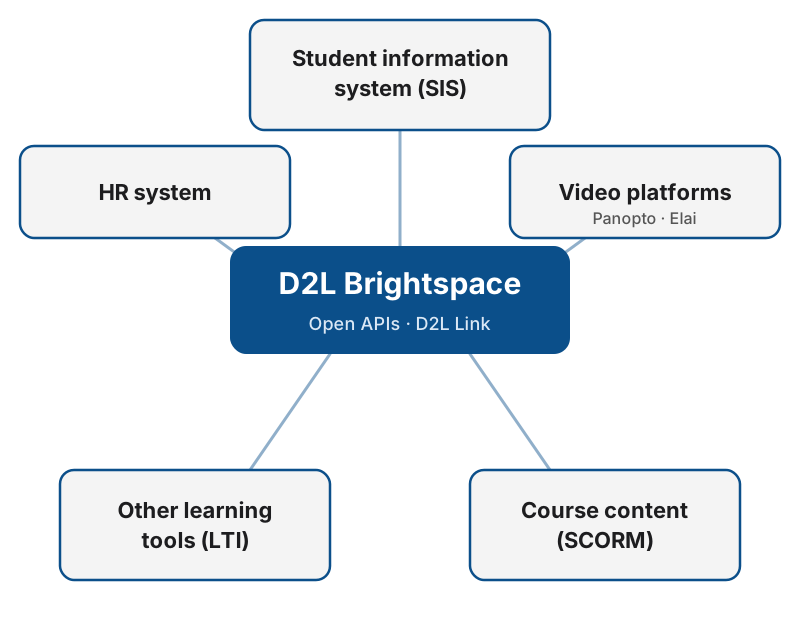
Learning data, user lists and video often live in separate systems. Someone ends up copying between them, information goes out of date and learners have to log in in several places.
How Brightspace helps
Brightspace connects to the systems you already use. It has open APIs and supports standards such as LTI and SCORM, and D2L Link makes it faster to set up integrations with student information systems, HR systems and other tools. Video platforms such as Panopto and Elai plug in as well, so video lives inside the course instead of next to it.
Viducon helps with the video side of this. See our video solutions.
5) Limited accessibility for different types of learners
Learners with visual, hearing, cognitive or motor difficulties are held back by platforms that were never built for them. At the same time, accessibility requirements apply to more and more organisations in Europe.
How Brightspace helps
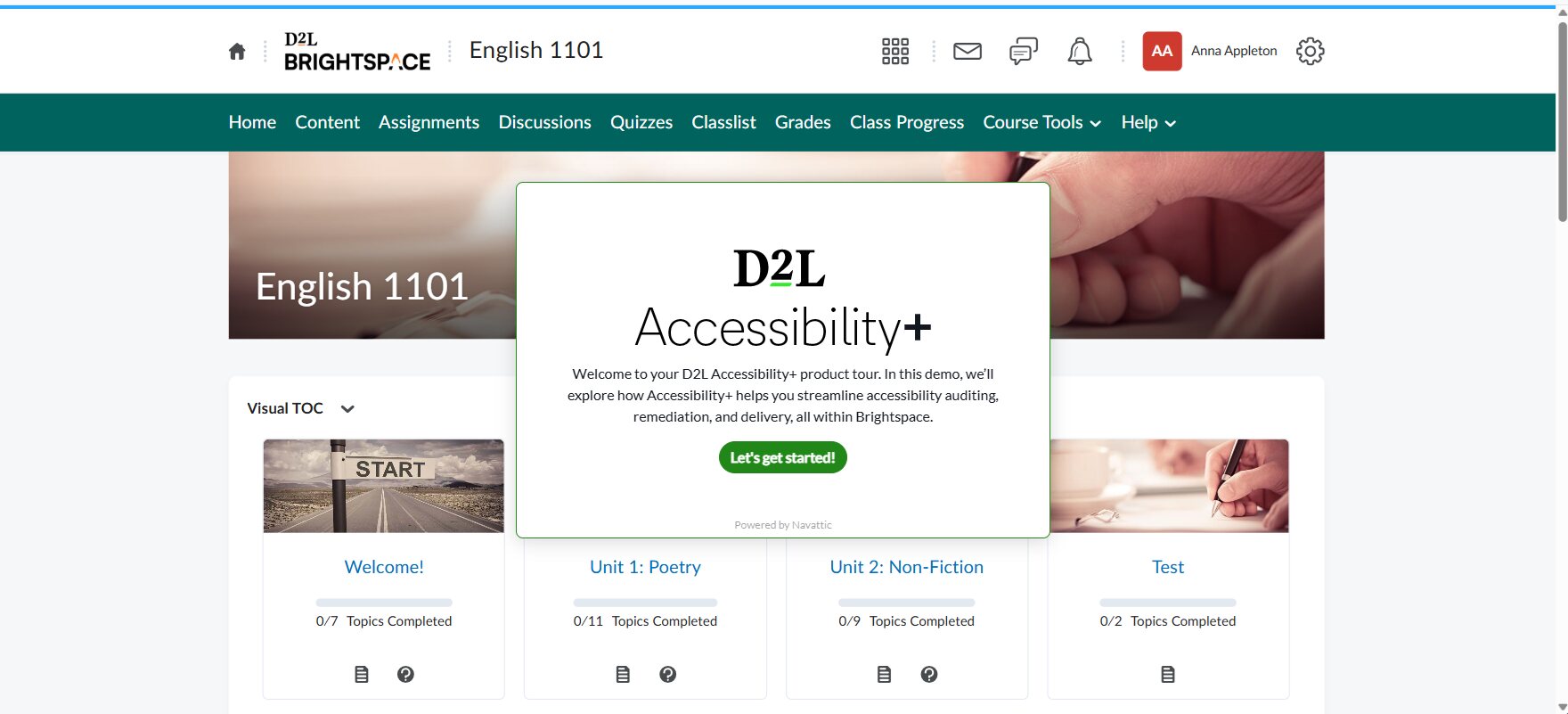
Brightspace is built to work with assistive technology such as screen readers, and D2L develops it against WCAG 2.2 and the European standard EN 301 549. Teachers get help making content accessible from the start, for example with automatic video captions and support for Universal Design for Learning, and learners can adjust the interface to their needs.
Read about the launch of D2L’s Accessibility+ in our blog post (in Danish): viducon.dk/d2l-lancerer-accessibility-plus